
%20-%20http://www.bohemiancoding.com/sketch%20--%3e%3ctitle%3eIcon/Menu%3c/title%3e%3cdesc%3eCreated%20with%20Sketch.%3c/desc%3e%3cdefs%3e%3cpolygon%20id='path-1'%20points='0.0005%200.646%2022.386%200.646%2022.386%203.1455%200.0005%203.1455'%3e%3c/polygon%3e%3cpolygon%20id='path-3'%20points='0.0005%200.9341%2022.386%200.9341%2022.386%203.4341%200.0005%203.4341'%3e%3c/polygon%3e%3cpolygon%20id='path-5'%20points='0.0005%200.5%2022.386%200.5%2022.386%203%200.0005%203'%3e%3c/polygon%3e%3c/defs%3e%3cg%20id='Symbols'%20stroke='none'%20stroke-width='1'%20fill='none'%20fill-rule='evenodd'%3e%3cg%20id='Icon/Menu'%3e%3cg%20id='Group-10-Copy'%20transform='translate(3.800000,%205.300000)'%3e%3cg%20id='Group-3'%20transform='translate(0.000000,%200.354500)'%3e%3cmask%20id='mask-2'%20fill='white'%3e%3cuse%20xlink:href='%23path-1'%3e%3c/use%3e%3c/mask%3e%3cg%20id='Clip-2'%3e%3c/g%3e%3cpath%20d='M22.3865,2.6455%20C22.3865,2.9205%2022.1615,3.1455%2021.8865,3.1455%20L0.5005,3.1455%20C0.2245,3.1455%200.0005,2.9205%200.0005,2.6455%20L0.0005,1.1455%20C0.0005,0.8705%200.2245,0.6455%200.5005,0.6455%20L21.8865,0.6455%20C22.1615,0.6455%2022.3865,0.8705%2022.3865,1.1455%20L22.3865,2.6455%20Z'%20id='Fill-1'%20fill='%23FFFFFF'%20mask='url(%23mask-2)'%3e%3c/path%3e%3c/g%3e%3cg%20id='Group-6'%20transform='translate(0.000000,%207.354500)'%3e%3cmask%20id='mask-4'%20fill='white'%3e%3cuse%20xlink:href='%23path-3'%3e%3c/use%3e%3c/mask%3e%3cg%20id='Clip-5'%3e%3c/g%3e%3cpath%20d='M22.3865,2.9341%20C22.3865,3.2091%2022.1615,3.4341%2021.8865,3.4341%20L0.5005,3.4341%20C0.2245,3.4341%200.0005,3.2091%200.0005,2.9341%20L0.0005,1.4341%20C0.0005,1.1591%200.2245,0.9341%200.5005,0.9341%20L21.8865,0.9341%20C22.1615,0.9341%2022.3865,1.1591%2022.3865,1.4341%20L22.3865,2.9341%20Z'%20id='Fill-4'%20fill='%23FFFFFF'%20mask='url(%23mask-4)'%3e%3c/path%3e%3c/g%3e%3cg%20id='Group-9'%20transform='translate(0.000000,%2015.354500)'%3e%3cmask%20id='mask-6'%20fill='white'%3e%3cuse%20xlink:href='%23path-5'%3e%3c/use%3e%3c/mask%3e%3cg%20id='Clip-8'%3e%3c/g%3e%3cpath%20d='M22.3865,2.5%20C22.3865,2.775%2022.1615,3%2021.8865,3%20L0.5005,3%20C0.2245,3%200.0005,2.775%200.0005,2.5%20L0.0005,1%20C0.0005,0.725%200.2245,0.5%200.5005,0.5%20L21.8865,0.5%20C22.1615,0.5%2022.3865,0.725%2022.3865,1%20L22.3865,2.5%20Z'%20id='Fill-7'%20fill='%23FFFFFF'%20mask='url(%23mask-6)'%3e%3c/path%3e%3c/g%3e%3c/g%3e%3c/g%3e%3c/g%3e%3c/svg%3e)
'%20fill='%23fff'%20fill-rule='nonzero'%3e%3cg%20id='icon/fold'%20transform='translate(240.000000,%20272.000000)'%3e%3cpath%20d='M11.5,2.3%20C6.4216,2.3%202.3,6.4216%202.3,11.5%20C2.3,16.5784%206.4216,20.7%2011.5,20.7%20C16.5784,20.7%2020.7,16.5784%2020.7,11.5%20C20.7,6.4216%2016.5784,2.3%2011.5,2.3%20Z%20M10.58,18.7956%20C6.946,18.3448%204.14,15.2536%204.14,11.5%20C4.14,10.9296%204.2136,10.3868%204.3332,9.8532%20L8.74,14.26%20L8.74,15.18%20C8.74,16.192%209.568,17.02%2010.58,17.02%20L10.58,18.7956%20Z%20M16.928,16.4588%20C16.6888,15.7136%2016.008,15.18%2015.18,15.18%20L14.26,15.18%20L14.26,12.42%20C14.26,11.914%2013.846,11.5%2013.34,11.5%20L7.82,11.5%20L7.82,9.66%20L9.66,9.66%20C10.166,9.66%2010.58,9.246%2010.58,8.74%20L10.58,6.9%20L12.42,6.9%20C13.432,6.9%2014.26,6.072%2014.26,5.06%20L14.26,4.6828%20C16.9556,5.7776%2018.86,8.418%2018.86,11.5%20C18.86,13.4136%2018.124,15.1524%2016.928,16.4588%20Z'%20id='形状'%3e%3c/path%3e%3c/g%3e%3c/g%3e%3c/g%3e%3c/svg%3e)
Impact in Action

CRDMO: New Conjugates Are Expanding the Boundaries of Precision Medicine
2026/01/12
As precision medicine continues to advance, the ability to efficiently and specifically deliver therapeutic agents to diseased tissues has become a critical focus in drug development. One promising strategy involves conjugating therapeutic payloads with ligands that can bind to specific proteins or receptors expressed in target tissues. This approach has demonstrated both safety and efficacy in clinical practice. In addition to monoclonal antibodies, small molecules, peptides, and oligonucleotides have also emerged as targeting ligands, enabling precise drug delivery. However, these conjugation strategies often come with significant synthetic complexity. WuXi AppTec’s deep expertise in chemistry has laid a strong foundation for the development of such next-generation therapies. Through its comprehensive WuXi TIDES platform, WuXi AppTec provides integrated solutions for complex conjugates. This article explores various conjugation strategies that enhance tissue-specific drug delivery and highlights how WuXi TIDES accelerates conjugates development through its integrated CRDMO platform.
A typical conjugated drug consists of three core components: a targeting ligand, a therapeutic payload, and a linker that connects the two. The ligand is designed to selectively bind to receptors that are highly expressed on the surface of target cells, triggering receptor-mediated endocytosis and enabling efficient intracellular drug delivery. Compared to passive targeting or systemic exposure, this strategy allows drugs to be guided at the molecular level, improving efficacy while minimizing toxicity. To date, nearly 20 ADCs have been approved globally. Importantly, a new generation of conjugated drugs is emerging. They utilize small molecules, peptides, or oligonucleotides as targeting ligands, and feature a diverse range of payloads, including traditional cytotoxic agents, radioactive isotopes, and oligonucleotides, signaling a broadening of therapeutic modalities.
Among these innovations, N-acetylgalactosamine (GalNAc) has become a widely used ligand for liver-targeted drug delivery. This naturally occurring sugar binds specifically to the asialoglycoprotein receptor (ASGPR), which is abundantly expressed on hepatocytes. The GalNAc conjugation strategy has shown particularly strong performance in siRNA and antisense oligonucleotide (ASO) therapies, with several GalNAc-conjugated oligonucleotide drugs now approved by the FDA. These agents offer the convenience of subcutaneous administration, excellent patient compliance, efficient hepatic accumulation, lower required doses, and favorable safety profiles.
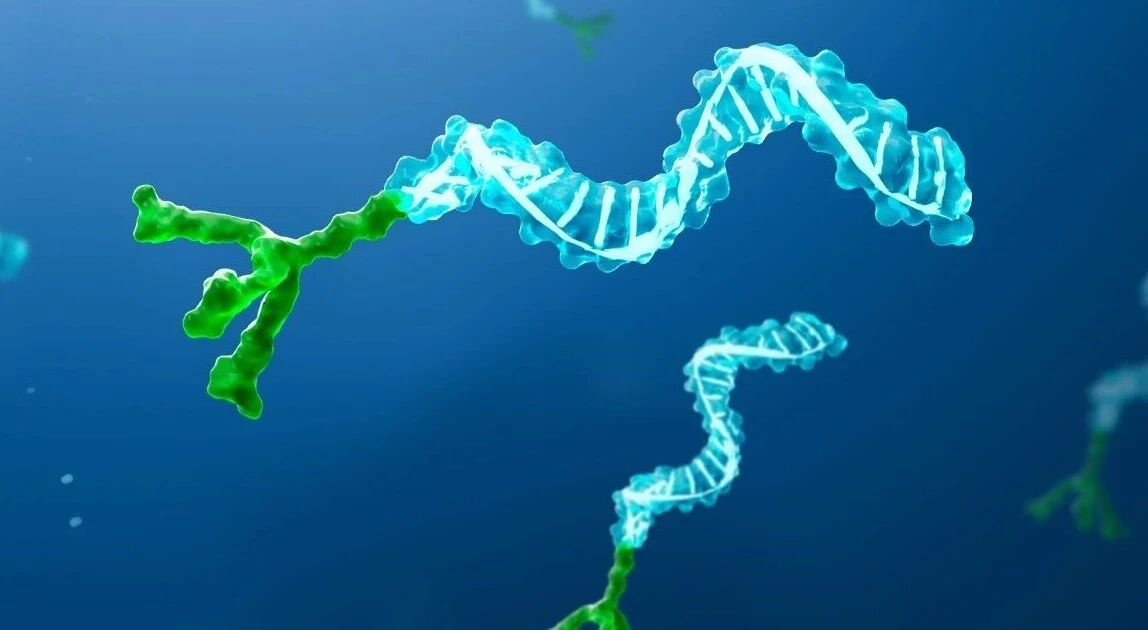
Peptides also serve as highly effective targeting ligands. Compared to antibodies, peptides offer smaller molecular size, better tissue penetration, and ease of chemical synthesis, making them an important focus for next-generation conjugated drug development. By targeting receptors that are overexpressed in tumors, such as integrins, somatostatin receptors (SSTR), or luteinizing hormone-releasing hormone (LHRH) receptors, peptide-drug conjugates can selectively eliminate cancer cells. For example, Lutathera (177Lu-dotatate), developed by Novartis, is a peptide-radionuclide conjugate that targets SSTR for the treatment of neuroendocrine tumors. In the pipeline, ITM Isotope Technologies’ 177Lu-edotreotide has achieved its primary endpoint in a Phase 3 clinical trial for gastroenteropancreatic neuroendocrine tumors. The company recently filed a New Drug Application (NDA). Additionally, Bicycle Therapeutics is advancing multiple clinical-stage programs involving bicyclic peptide conjugates that target antigens such as nectin-4 and EphA2, delivering cytotoxic or radiotherapeutic payloads to precisely kill tumor cells.
Peptides are also showing promise in the delivery of oligonucleotide-based therapies. Bicycle Therapeutics, in collaboration with Ionis Pharmaceuticals, is developing bicyclic peptides targeting the transferrin receptor to deliver ASO drugs to muscle and central nervous system tissues. This approach aims to enhance both therapeutic efficacy and tissue specificity.
In addition to small molecules and peptides, aptamers represent another class of promising targeting ligands. These single-stranded DNA or RNA molecules form three-dimensional structures that bind to target molecules with high affinity and specificity, earning them the moniker “chemical antibodies.” Two aptamer-based drugs have already been approved by the FDA for the treatment of age-related macular degeneration. With their small molecular size, structural controllability, and low immunogenicity, aptamers are ideally suited for the design of next-generation conjugated therapies. Multiple aptamer-drug conjugates are currently in clinical development to improve the tumor-specific delivery of cytotoxic agents. Researchers are also exploring aptamer-based systems for the targeted delivery of oligonucleotides and nanoscale structures.
WuXi TIDES, a specialized CRDMO platform under WuXi AppTec, provides efficient, flexible, and high-quality solutions for the development of oligonucleotides, peptides, and related chemically conjugated molecules—collectively known as "TIDES" drugs. The platform integrates advanced peptide capabilities with small molecule chemistry, supporting various peptide conjugates, including but not limited to: peptide-toxin, peptide-metal, peptide-GalNAc, peptide-PMO, peptide-oligonucleotide, radionuclide drug conjugate (RDC), etc. The platform’s integrated nature enables cross-functional teams to collaborate in parallel, significantly accelerating project timelines. The following case study illustrates how WuXi TIDES’ integrated platform enables partners to accelerate the development of a peptide-GalNAc conjugate therapy.
Integrated Platform Empowering Peptide Conjugate Development
In this project, the partner’s goal was to advance a peptide-GalNAc conjugate drug candidate, still at the discovery stage, toward an IND submission. The program, however, faced several challenges. The molecular structure of the candidate was highly complex, and a critical peptide intermediate in the synthesis process exhibited very poor solubility, leading to low overall yield. At the same time, because the partner prioritized eventual commercialization, establishing a cost-effective manufacturing process became a central objective in early development.
To address these obstacles, WuXi TIDES’ API, Drug Product and Analytical teams worked in close collaboration. The most urgent issue was the low overall yield. By leveraging WuXi TIDES’ in-house GalNAc synthesis capabilities, the R&D team implemented a series of quality control measures that resolved critical impurity issues in the GalNAc raw material. The team improved the poor solubility of a key peptide intermediate by directly using fractions and adding ligands. Through multiple rounds of process optimization, they not only enhanced the solubility of the key peptide intermediate but also doubled the overall yield, from 10% at the discovery stage to 20%. Thanks to efficient cross-team collaboration, WuXi TIDES advanced the program to the IND submission stage within just 12 months. The client, highly satisfied with the improved yield, chose to continue working with the WuXi TIDES team on GMP manufacturing.
In parallel with improving yield, the WuXi TIDES team also focused on reducing manufacturing costs. They conducted systematic optimization of the production and purification processes for the peptide-GalNAc conjugate. Replacing costly raw materials reduced material costs by 8%. Streamlining the production steps of a key intermediate from eight steps to seven further lowered overall costs by 10%. In addition, adopting multi-column counter-current solvent gradient purification (MCSGP) technology not only shortened the production cycle but also reduced costs further. Ultimately, this series of continuous optimizations enabled the team to reduce the cost per kilogram by over 70% for an multi-kilogram GMP batch compared to the earlier one kilogram GLP batch.
WuXi TIDES also offers one-stop solutions for complex oligonucleotide-drug conjugates, supporting projects from discovery and development through to commercial-scale manufacturing. The platform enables the conjugation of oligonucleotides with GalNAc, peptides, aptamers, lipids, therapeutic agents, and other custom small molecules.
By uniting “precise targeting” with “effective therapy,” conjugated drugs offer a new paradigm in drug innovation. The ability to select from a wide variety of ligands and payloads not only enhances tissue specificity but also expands the scope of drug types and indications. Looking ahead, WuXi TIDES will continue to leverage its fully integrated, end-to-end CRDMO platform to support partners in advancing diverse classes of conjugated drugs—including peptide- and oligonucleotide-based conjugates—ultimately helping to transform scientific breakthroughs into life-changing therapies for patients worldwide.