
%20-%20http://www.bohemiancoding.com/sketch%20--%3e%3ctitle%3eIcon/Menu%3c/title%3e%3cdesc%3eCreated%20with%20Sketch.%3c/desc%3e%3cdefs%3e%3cpolygon%20id='path-1'%20points='0.0005%200.646%2022.386%200.646%2022.386%203.1455%200.0005%203.1455'%3e%3c/polygon%3e%3cpolygon%20id='path-3'%20points='0.0005%200.9341%2022.386%200.9341%2022.386%203.4341%200.0005%203.4341'%3e%3c/polygon%3e%3cpolygon%20id='path-5'%20points='0.0005%200.5%2022.386%200.5%2022.386%203%200.0005%203'%3e%3c/polygon%3e%3c/defs%3e%3cg%20id='Symbols'%20stroke='none'%20stroke-width='1'%20fill='none'%20fill-rule='evenodd'%3e%3cg%20id='Icon/Menu'%3e%3cg%20id='Group-10-Copy'%20transform='translate(3.800000,%205.300000)'%3e%3cg%20id='Group-3'%20transform='translate(0.000000,%200.354500)'%3e%3cmask%20id='mask-2'%20fill='white'%3e%3cuse%20xlink:href='%23path-1'%3e%3c/use%3e%3c/mask%3e%3cg%20id='Clip-2'%3e%3c/g%3e%3cpath%20d='M22.3865,2.6455%20C22.3865,2.9205%2022.1615,3.1455%2021.8865,3.1455%20L0.5005,3.1455%20C0.2245,3.1455%200.0005,2.9205%200.0005,2.6455%20L0.0005,1.1455%20C0.0005,0.8705%200.2245,0.6455%200.5005,0.6455%20L21.8865,0.6455%20C22.1615,0.6455%2022.3865,0.8705%2022.3865,1.1455%20L22.3865,2.6455%20Z'%20id='Fill-1'%20fill='%23FFFFFF'%20mask='url(%23mask-2)'%3e%3c/path%3e%3c/g%3e%3cg%20id='Group-6'%20transform='translate(0.000000,%207.354500)'%3e%3cmask%20id='mask-4'%20fill='white'%3e%3cuse%20xlink:href='%23path-3'%3e%3c/use%3e%3c/mask%3e%3cg%20id='Clip-5'%3e%3c/g%3e%3cpath%20d='M22.3865,2.9341%20C22.3865,3.2091%2022.1615,3.4341%2021.8865,3.4341%20L0.5005,3.4341%20C0.2245,3.4341%200.0005,3.2091%200.0005,2.9341%20L0.0005,1.4341%20C0.0005,1.1591%200.2245,0.9341%200.5005,0.9341%20L21.8865,0.9341%20C22.1615,0.9341%2022.3865,1.1591%2022.3865,1.4341%20L22.3865,2.9341%20Z'%20id='Fill-4'%20fill='%23FFFFFF'%20mask='url(%23mask-4)'%3e%3c/path%3e%3c/g%3e%3cg%20id='Group-9'%20transform='translate(0.000000,%2015.354500)'%3e%3cmask%20id='mask-6'%20fill='white'%3e%3cuse%20xlink:href='%23path-5'%3e%3c/use%3e%3c/mask%3e%3cg%20id='Clip-8'%3e%3c/g%3e%3cpath%20d='M22.3865,2.5%20C22.3865,2.775%2022.1615,3%2021.8865,3%20L0.5005,3%20C0.2245,3%200.0005,2.775%200.0005,2.5%20L0.0005,1%20C0.0005,0.725%200.2245,0.5%200.5005,0.5%20L21.8865,0.5%20C22.1615,0.5%2022.3865,0.725%2022.3865,1%20L22.3865,2.5%20Z'%20id='Fill-7'%20fill='%23FFFFFF'%20mask='url(%23mask-6)'%3e%3c/path%3e%3c/g%3e%3c/g%3e%3c/g%3e%3c/g%3e%3c/svg%3e)
'%20fill='%23fff'%20fill-rule='nonzero'%3e%3cg%20id='icon/fold'%20transform='translate(240.000000,%20272.000000)'%3e%3cpath%20d='M11.5,2.3%20C6.4216,2.3%202.3,6.4216%202.3,11.5%20C2.3,16.5784%206.4216,20.7%2011.5,20.7%20C16.5784,20.7%2020.7,16.5784%2020.7,11.5%20C20.7,6.4216%2016.5784,2.3%2011.5,2.3%20Z%20M10.58,18.7956%20C6.946,18.3448%204.14,15.2536%204.14,11.5%20C4.14,10.9296%204.2136,10.3868%204.3332,9.8532%20L8.74,14.26%20L8.74,15.18%20C8.74,16.192%209.568,17.02%2010.58,17.02%20L10.58,18.7956%20Z%20M16.928,16.4588%20C16.6888,15.7136%2016.008,15.18%2015.18,15.18%20L14.26,15.18%20L14.26,12.42%20C14.26,11.914%2013.846,11.5%2013.34,11.5%20L7.82,11.5%20L7.82,9.66%20L9.66,9.66%20C10.166,9.66%2010.58,9.246%2010.58,8.74%20L10.58,6.9%20L12.42,6.9%20C13.432,6.9%2014.26,6.072%2014.26,5.06%20L14.26,4.6828%20C16.9556,5.7776%2018.86,8.418%2018.86,11.5%20C18.86,13.4136%2018.124,15.1524%2016.928,16.4588%20Z'%20id='形状'%3e%3c/path%3e%3c/g%3e%3c/g%3e%3c/g%3e%3c/svg%3e)
Impact in Action

Lighting the Way: A New Book by WuXi AppTec DMPK Leverages 20 Years of Experience to Drive Industry Advancement
2026/07/22
In the autumn of 2025, a dark-blue-covered book published by a professional publisher was displayed at the booth of an international academic conference.
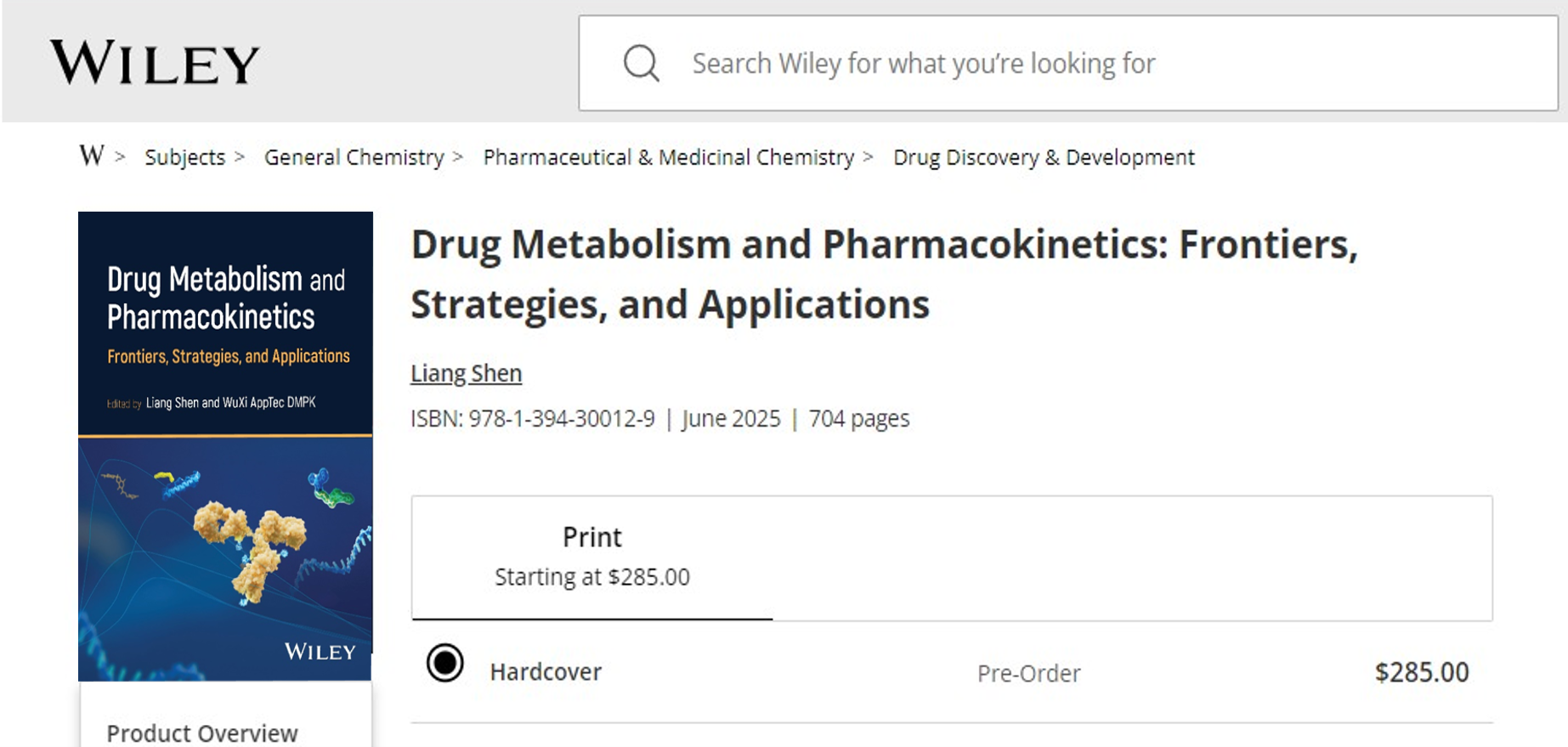
At the new book launch symposium during the International Society for the Study of Xenobiotics (ISSX) Meeting, this new book called Drug Metabolism and Pharmacokinetics: Frontiers, Strategies, and Applications had just appeared and generated interest among conference attendees.
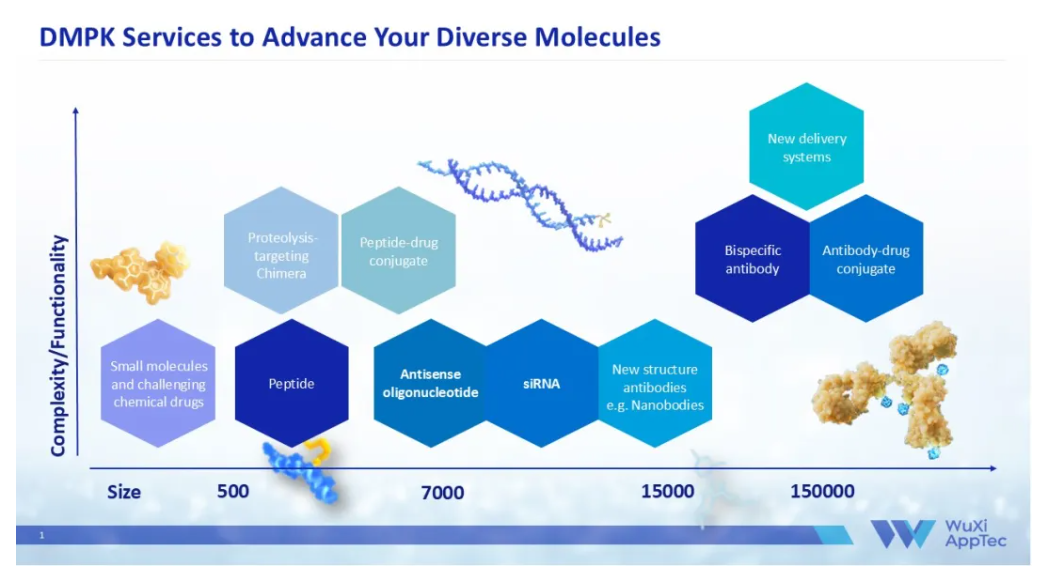
Some participants flipped through the catalog and expressed interest upon seeing chapters on novel modalities such as Proteolysis-Targeting Chimeras, antibody-drug conjugates (ADCs), peptides, and oligonucleotides.
Simply put, drug metabolism and pharmacokinetics (DMPK) mainly studies what the body does to the drug after it enters the body, that is, the dynamic law of absorption, distribution, metabolism, and excretion (ADME), combined with the drug's efficacy and safety, to comprehensively determine whether a candidate molecule has the potential to become a viable drug, as well as the appropriate dosage regimen.
The book consolidates the work of the WuXi AppTec DMPK, which had been “exploring the path” in the DMPK field for novel modalities over the past decade.
New Needs in the Era of Novel Modalities
Over the past two decades, WuXi AppTec DMPK has grown from a hundred to over a thousand employees and has become a recognized professional team worldwide. Over this period, the team has supported customers worldwide across the full development journey, with candidate compounds advancing through late-stage development and, in a number of cases, reaching patients as approved therapies – including a growing range of modality treatments.
When various novel modalities spring up: Proteolysis-Targeting Chimeras that can accurately "disassemble" pathogenic proteins, ADCs that can target specific cells, and peptides and oligonucleotides that can precisely regulate cell receptor signaling or upstream expression processes … New challenges have also emerged — although there were active studies and diverse exploration paths in DMPK strategies for novel drug modalities, the experience accumulated across different regions and institutions worldwide was so scattered, that it was difficult to find a systematic reference book.
“It has never happened before that I looked at a book proposal and then said to myself: 'ha, this is the book that I need right now!' But this one did.……If WuXi AppTec could publish such a book, I would not be surprised many authors feel that the book is very timely.” A medicinal chemist evaluated the proposal for this book as a peer reviewer, who has decades of experience at companies, also time in academia.
Helping Illuminate the Path for the Industry
The peer reviewer highlighted that this book would fill a critical gap, offering timely guidance on the new advancements. “While research papers and review articles can generally keep up with the pace of the advancements in novel modalities, books largely lag behind for good reason — the materials are new, and it takes a special kind of authors who keep up with the progress and is able to digest and summarize them.”
Many years ago, when the WuXi AppTec DMPK team first came into contact with these novel modalities, they also moved forward by trying and exploring, experienced a series of “trial and error” and conquered a lot of difficulties.
Today, with extensive experience in novel modalities, the team has explored and iterated through repeated practice to consolidate verifiable and practical approaches, aiming to efficiently address the DMPK challenges associated with various novel modalities.
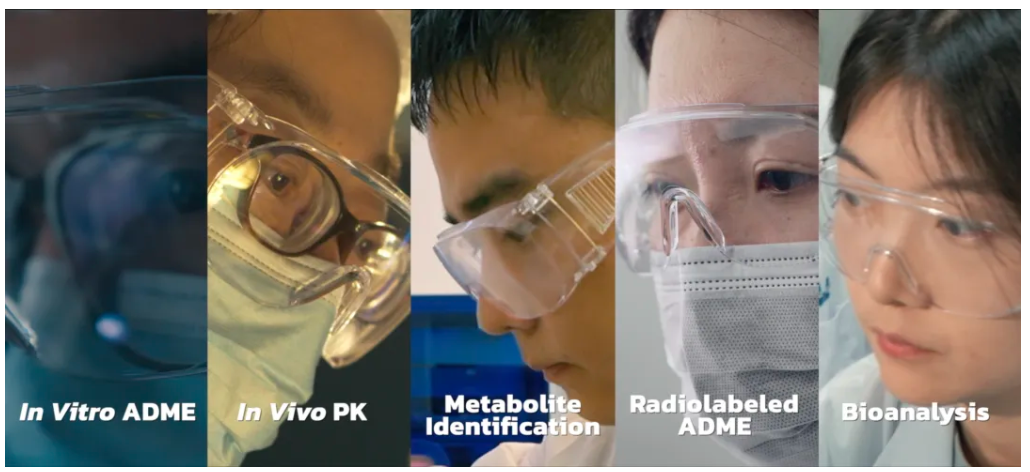
Looking back at the journey they have traveled, it seems like a large group groped forward across a dark wilderness, and the methodologies and lessons distilled from that long journey now stand like searchlights left along the way. "If each lamp shines alone, when will the path of the entire industry be illuminated?" Dr. Liang Shen, Vice President, Global Head of DMPK Department at WuXi AppTec, asked a thought-provoking question.
He and the team made a decision: to openly share their generalizable methods and practical experience accumulated over the years — “When everyone lights a lamp, the field becomes better illuminated; when everyone shares some information, then the promising direction will be found faster, and the roads below us will be wider and wider.”
Producing a Practical Reference for the Biomedical Industry
In the spring of 2024, under the auspices of Dr. Liang Shen, a compilation working group with more than 100 core members was established. All of them were senior scientists from WuXi AppTec DMPK team, who had ploughed on the front lines for many years.
Once the basic framework of the book was finalized, compilation was officially launched and challenges ensued.
The first challenge was how to extract essential information from plenty of experience. Faced with a vast internal methodological and experience that had been reserved, as well as over 100 existing daily technical summaries as initial materials, the content group of DMPK systematically sorted through the massive and complex materials, from which the integration practice strategies with more instructive value were extracted; meanwhile, they actively sorted out the update progress of the industry to ensure that the content would be up-to-date and aligned with frontier drug development trends within a few years.
The second challenge was controlling the depth of the content. Dr. Liang Shen explicitly required the content focus on the book’s role as a reference book, avoiding theory and background overload. The goal was to ensure that the content serves as a practical reference useful for both researchers and students involved in pharmacokinetics. This is closely related to the team's positioning as a globally integrated CRDMO — with extensive enabling experience in novel modalities, with the ability to “connect decentralized knowledge points into lines and then into surfaces”, thereby improving the overall efficiency of the industry.
The compilation process involved global collaboration among over a hundred authors across multiple locations, posing a significant challenge to the team. How to coordinate the simultaneous compilation of multiple chapters? How to ensure compliance with the publication requirements? To address these questions, DMPK experts from each field took the lead in coordinating and standardizing the content of each chapter, much like WuXi AppTec's CRDMO model, ensuring simultaneous progress under consistent quality standards to improve efficiency.
Eventually, in June 2025, the electronic and printed versions of this monograph — which condensed extensive practical experience, amounted to 576 pages and over one million words — were released successively.
Jonathan T. Rose, Senior Editor at Wiley Publishing, who oversaw the publication of this book, lamented: “When I first reviewed this proposal, its practical and forward-looking approach stood out. What sets this book apart, is its ability to turn frontier research into clear and applicable strategies. Many publications touch on emerging modalities, but few offer the depth and structure of a full book.”
The book received positive attention following publication. At international academic conferences such as ISSX, the American Association of Pharmaceutical Scientists (AAPS) Annual Meeting, and the Drug Metabolism and Discussion Group (DMDG) Conference, the printed version of the book immediately attracted attention upon its unveiling. After reading the book, many colleagues stated that its practical approaches and clear guidelines were valuable references.
Nowadays, the electronic and printed versions have sold thousands of copies, reaching readers in 27 countries or regions, throughout North America, Europe, and Asia.
A Book that Lit the Spark, and a Path Caught the Light
“We're not publishing this book merely for the sake of publishing it.” Dr. Liang Shen said, “but to help the industry avoid detours, so that more patients have a better chance of accessing innovative medicines sooner.”
When asked whether sharing experience could reduce demand for their services, Dr. Liang Shen smiled and responded that openness can foster broader progress and collaboration.
Dr. Liang Shen believes that true progress is not just about one company's victory, but about the entire industry taking a step forward together. “You share a model, I improve a method, and he or she verifies a hypothesis” — gradually in this way, a global collaboration network could be efficiently formed to benefit patients.
The birth of a book often marks the beginning of a grander story. For the WuXi AppTec DMPK team, the completion of this book is not an end, but a new beginning. In the future, as science and technology advanced and drug modalities continue to evolve, the team will closely track industry trends, continuously accumulate practical experience, approaches, and knowledge in enabling more innovative therapies, and continue to enable the industry.
“We hope this work will contribute to the cycle of knowledge sharing,” said Dr. Liang Shen. “We shared our experience, the industry provided feedback, which in turn will prompt us to continue exploring and optimizing.”
Scientific progress is rarely a solo performance by one company; it’s more often a collective effort. Just like this monograph with dark blue cover, it is not just a reference book published by WuXi AppTec, but also an invitation — an invitation to the entire industry to join in a symphony, which named “Every drug can be made, and every disease can be treated”.