
%20-%20http://www.bohemiancoding.com/sketch%20--%3e%3ctitle%3eIcon/Menu%3c/title%3e%3cdesc%3eCreated%20with%20Sketch.%3c/desc%3e%3cdefs%3e%3cpolygon%20id='path-1'%20points='0.0005%200.646%2022.386%200.646%2022.386%203.1455%200.0005%203.1455'%3e%3c/polygon%3e%3cpolygon%20id='path-3'%20points='0.0005%200.9341%2022.386%200.9341%2022.386%203.4341%200.0005%203.4341'%3e%3c/polygon%3e%3cpolygon%20id='path-5'%20points='0.0005%200.5%2022.386%200.5%2022.386%203%200.0005%203'%3e%3c/polygon%3e%3c/defs%3e%3cg%20id='Symbols'%20stroke='none'%20stroke-width='1'%20fill='none'%20fill-rule='evenodd'%3e%3cg%20id='Icon/Menu'%3e%3cg%20id='Group-10-Copy'%20transform='translate(3.800000,%205.300000)'%3e%3cg%20id='Group-3'%20transform='translate(0.000000,%200.354500)'%3e%3cmask%20id='mask-2'%20fill='white'%3e%3cuse%20xlink:href='%23path-1'%3e%3c/use%3e%3c/mask%3e%3cg%20id='Clip-2'%3e%3c/g%3e%3cpath%20d='M22.3865,2.6455%20C22.3865,2.9205%2022.1615,3.1455%2021.8865,3.1455%20L0.5005,3.1455%20C0.2245,3.1455%200.0005,2.9205%200.0005,2.6455%20L0.0005,1.1455%20C0.0005,0.8705%200.2245,0.6455%200.5005,0.6455%20L21.8865,0.6455%20C22.1615,0.6455%2022.3865,0.8705%2022.3865,1.1455%20L22.3865,2.6455%20Z'%20id='Fill-1'%20fill='%23FFFFFF'%20mask='url(%23mask-2)'%3e%3c/path%3e%3c/g%3e%3cg%20id='Group-6'%20transform='translate(0.000000,%207.354500)'%3e%3cmask%20id='mask-4'%20fill='white'%3e%3cuse%20xlink:href='%23path-3'%3e%3c/use%3e%3c/mask%3e%3cg%20id='Clip-5'%3e%3c/g%3e%3cpath%20d='M22.3865,2.9341%20C22.3865,3.2091%2022.1615,3.4341%2021.8865,3.4341%20L0.5005,3.4341%20C0.2245,3.4341%200.0005,3.2091%200.0005,2.9341%20L0.0005,1.4341%20C0.0005,1.1591%200.2245,0.9341%200.5005,0.9341%20L21.8865,0.9341%20C22.1615,0.9341%2022.3865,1.1591%2022.3865,1.4341%20L22.3865,2.9341%20Z'%20id='Fill-4'%20fill='%23FFFFFF'%20mask='url(%23mask-4)'%3e%3c/path%3e%3c/g%3e%3cg%20id='Group-9'%20transform='translate(0.000000,%2015.354500)'%3e%3cmask%20id='mask-6'%20fill='white'%3e%3cuse%20xlink:href='%23path-5'%3e%3c/use%3e%3c/mask%3e%3cg%20id='Clip-8'%3e%3c/g%3e%3cpath%20d='M22.3865,2.5%20C22.3865,2.775%2022.1615,3%2021.8865,3%20L0.5005,3%20C0.2245,3%200.0005,2.775%200.0005,2.5%20L0.0005,1%20C0.0005,0.725%200.2245,0.5%200.5005,0.5%20L21.8865,0.5%20C22.1615,0.5%2022.3865,0.725%2022.3865,1%20L22.3865,2.5%20Z'%20id='Fill-7'%20fill='%23FFFFFF'%20mask='url(%23mask-6)'%3e%3c/path%3e%3c/g%3e%3c/g%3e%3c/g%3e%3c/g%3e%3c/svg%3e)
'%20fill='%23fff'%20fill-rule='nonzero'%3e%3cg%20id='icon/fold'%20transform='translate(240.000000,%20272.000000)'%3e%3cpath%20d='M11.5,2.3%20C6.4216,2.3%202.3,6.4216%202.3,11.5%20C2.3,16.5784%206.4216,20.7%2011.5,20.7%20C16.5784,20.7%2020.7,16.5784%2020.7,11.5%20C20.7,6.4216%2016.5784,2.3%2011.5,2.3%20Z%20M10.58,18.7956%20C6.946,18.3448%204.14,15.2536%204.14,11.5%20C4.14,10.9296%204.2136,10.3868%204.3332,9.8532%20L8.74,14.26%20L8.74,15.18%20C8.74,16.192%209.568,17.02%2010.58,17.02%20L10.58,18.7956%20Z%20M16.928,16.4588%20C16.6888,15.7136%2016.008,15.18%2015.18,15.18%20L14.26,15.18%20L14.26,12.42%20C14.26,11.914%2013.846,11.5%2013.34,11.5%20L7.82,11.5%20L7.82,9.66%20L9.66,9.66%20C10.166,9.66%2010.58,9.246%2010.58,8.74%20L10.58,6.9%20L12.42,6.9%20C13.432,6.9%2014.26,6.072%2014.26,5.06%20L14.26,4.6828%20C16.9556,5.7776%2018.86,8.418%2018.86,11.5%20C18.86,13.4136%2018.124,15.1524%2016.928,16.4588%20Z'%20id='形状'%3e%3c/path%3e%3c/g%3e%3c/g%3e%3c/g%3e%3c/svg%3e)
Press Releases

BioXconomy | Scaling success: How WuXi AppTec aims to catalyze Europe's biotech transformation
2025/06/30
In this exclusive interview, co-CEO of WuXi AppTec Steve Yang shares insights on strengthening Europe's biotech ecosystem through strategic CDMO partnerships.
Millie Nelson, Editor, Partnering and Investment, BioXconomy
June 30, 2025
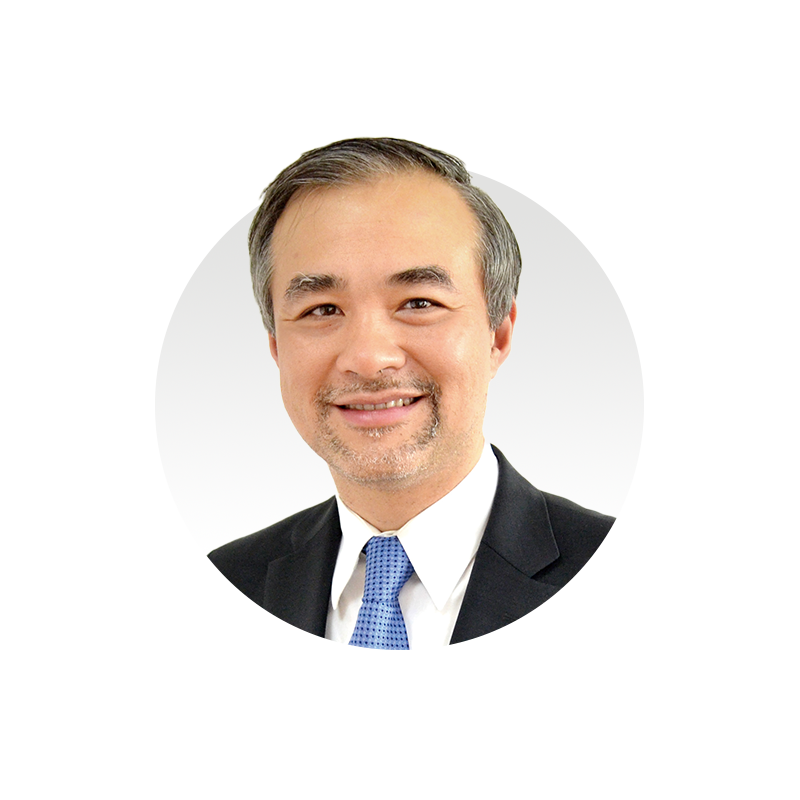
Steve Yang, co-CEO of WuXi AppTec. Image/co WuXi AppTec
Europe's biotech space is hampered by a notable disparity: an abundance of research innovation existing in parallel with capital and commercialization challenges. While the region excels in fundamental research and early discovery, European biotechs often struggle with the capital-intensive journey from laboratory breakthrough to market-ready product.
Yang spoke to BioXconomy about how Europe can better capitalize on its scientific strengths through integrated development partnerships and ecosystem collaboration. As WuXi AppTec expands its European footprint with specialized facilities in Germany and Switzerland, Yang provided insights on connecting regional innovation hubs, navigating funding challenges, and building sustainable growth models that could potentially transform Europe's scientific knowhow into commercial leadership.
BioXconomy (BX): How do you think Europe could better capitalize on its scientific strengths?
Steve Yang (SY): Europe has exceptional scientific talent, but historically, there's been a gap in translating groundbreaking discoveries into commercial development. While funding has traditionally been stronger in the US, Europe can significantly improve its innovation output by streamlining the translation from basic research to market-ready products. This is precisely where WuXi AppTec's integrated contract research development and manufacturing organization (CRDMO) model creates tangible value.
A key reason for the success of the US biotech sector is the adoption of CRO, CDMO, and CMO services. By embracing structured scalability, early-stage engagement with integrated CRDMOs, effective tech transfer, and stronger pan-European collaborations, Europe can develop more sustainable, growth-oriented biotech companies rather than short-term projects.
BX: What advantages does a CRDMO provide?
SY: A CRDMO not only provides infrastructure and technical capabilities across the entire drug development cycle but also plays a key educational role: it supports academic spin-offs and early-stage companies in navigating regulatory frameworks, industrial quality standards, and scale-up processes. For example, a university spin-off developing a novel peptide therapy may lack experience in formulation or good manufacturing practice (GMP) production; by partnering with a CRDMO like WuXi AppTec, it gains both executional capacity and critical industry knowledge.
BX: Could you speak specifically about WuXi AppTec’s capabilities and strategy in Europe?
SY: Europe represents our next major strategic growth frontier. WuXi AppTec already maintains operational sites in Munich, Germany, and Couvet, Switzerland […] Munich focuses on early-stage drug discovery and provides customized services in drug discovery, X-ray crystallography, protein supply, and biophysical analysis. Couvet specializes in drug product manufacturing and packaging, offering flexibility in late-stage clinical and commercial-scale production.
Yet this commitment extends beyond operational presence to integration in local ecosystems, including investments in sustainability, such as geothermal energy, solar power, and rainwater recycling at our Swiss site. Our European expansion also prioritizes empowering local management and fostering workforce development to ensure long-term, community-driven growth.
We proactively collaborate with European academic institutions, venture capital (VC) investors, and emerging biotech companies through ecosystem-building events and strategic partnerships. This active engagement ensures WuXi AppTec remains not merely a service provider, but rather a pivotal enabler of Europe's long-term biotech innovation and growth.
BX: You mentioned sustainability. What does a sustainable biotech ecosystem mean to you?
SY: A sustainable biotech ecosystem means having a robust framework where innovative research seamlessly progresses from discovery through commercial realization. It's about enabling biotech companies to scale effectively without large upfront investments, attracting sustained venture capital interest, and building diversified, long-term pipelines.
Equally important is the need to deepen collaboration between scientific hubs. Different regions have distinct strengths, Munich excels in early-stage venturing, Berlin in clinical research, and Heidelberg in fundamental science. Connecting these hubs through structured partnerships will create a more cohesive innovation landscape. This collaboration should also extend internationally, with clusters in the US and UK, offering exposure to best practices and new market opportunities.
A proven example is the Massachusetts biotech ecosystem, renowned for effectively integrating foundational research, capital, strategic investors, industry expertise, and scalable development capacities, providing a clear blueprint for Europe's potential success.
BX: Is success in this space possible with the current geopolitical landscape?
SY: Despite ongoing geopolitical uncertainties and funding challenges, the fundamental demand for developing innovative, life-saving medicines remains stable and growing globally. WuXi AppTec remains deeply optimistic and committed to enabling collaborative ecosystems, improving drug development efficiency, and helping companies navigate funding complexities. We see Europe's growth potential and are committed to strengthening and contributing to the European ecosystem.
BX: We can’t ignore the financial side of things. How are VCs changing their approach to development partners, and what implications does this have?
SY: With biotech companies now often pursuing later-stage exits, VCs have heightened expectations regarding commercial readiness and accelerated product development. Investors look for clear, compliant, and efficient routes to market, as these directly influence valuations and exit potentials.
Small and emerging biotech firms, typically capital- and resource-constrained, benefit significantly by partnering with comprehensive CRDMOs.
This "flywheel" model, driven by consistent quality, speed, and cost-efficiency, ensures continuous innovation momentum, helping clients achieve higher valuations, attract investment, and ultimately reach markets faster and more reliably.
Quotes have been edited lightly for clarity.
Click here to read the original news.